
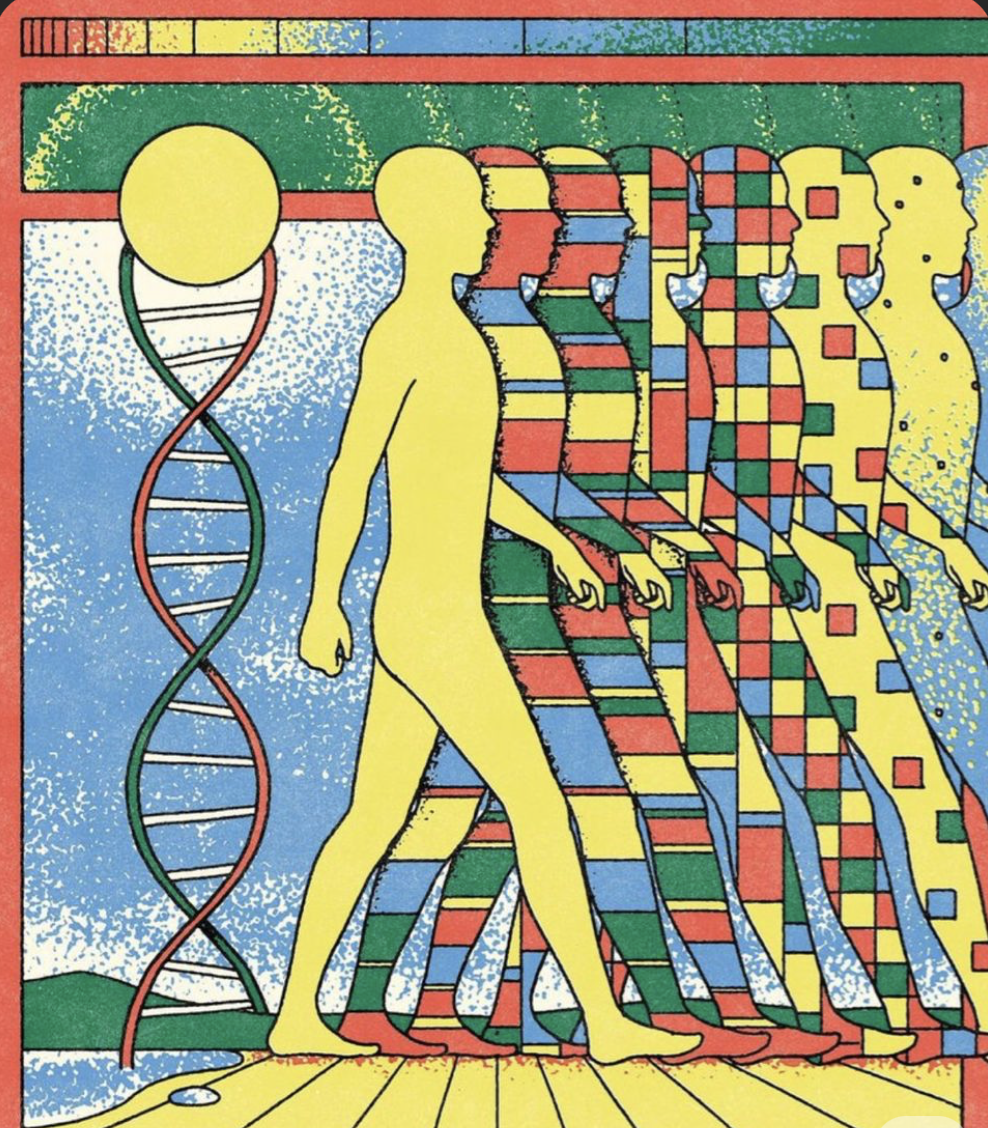
The simplest aim of somatics is to hone awareness.
Somatic practices offer opportunities to notice our sensations and the mingling relationships between body, mind, and spirit: to witness thoughts, emotions, and feelings as they take shape in our bodily experience. A worry arrives with a tightening chest. Relief comes with an exhalation. Joy changes how we stand, how we move, how much of the world we seem able to receive.
By spirit, I mean here our felt sense of meaning, connection, and belonging. More on that next time.

In my practice, I frequently say that, as it turns out, the mind is in the body. More carefully, our mental life is inseparable from the living processes that support it. Our experience of ourselves arises through a ceaseless exchange of information from within and beyond that incredible, corporeal container we call the body.
Some of this may sound obvious—or, hopefully, simple. Simple can be very good in a complex world. And it can be astounding what changes when we simply participate more fully in the present moment.
The body is an integrated network of networks. The nervous system, itself a network of networks, participates in a continuous exchange with the rest of us, receiving and interpreting information about our internal condition and our surroundings. Our experience of ourselves emerges within this exchange, even as the fullness of that experience may exceed what we can describe by naming its parts.
Through precise touch, particular movements, and targeted exercises, somatics invites us into a more developed relationship with the symphony of the body—and, through it, with ourselves and others.
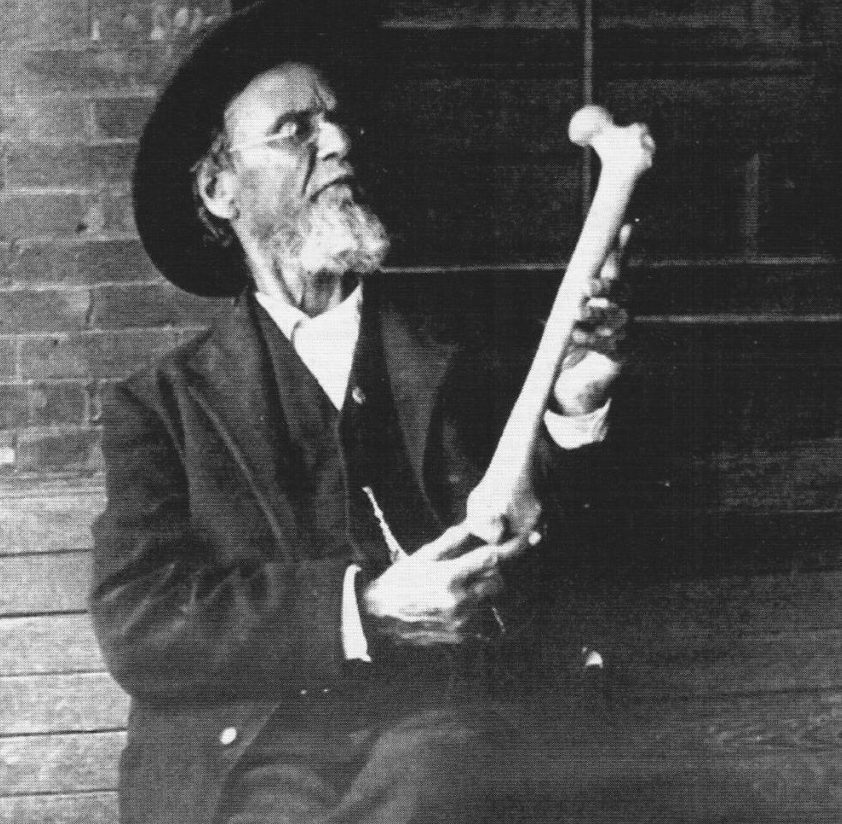
For me, somatics is about feeling more alive.
It says so right on my office mug, which bears the Integral Somatics insignia: “The aim of life is to live, and to live means to be aware, joyously, drunkenly, serenely, divinely aware.” Henry Miller gives us language for something easily forgotten in the business of being human: living deserves our attention.
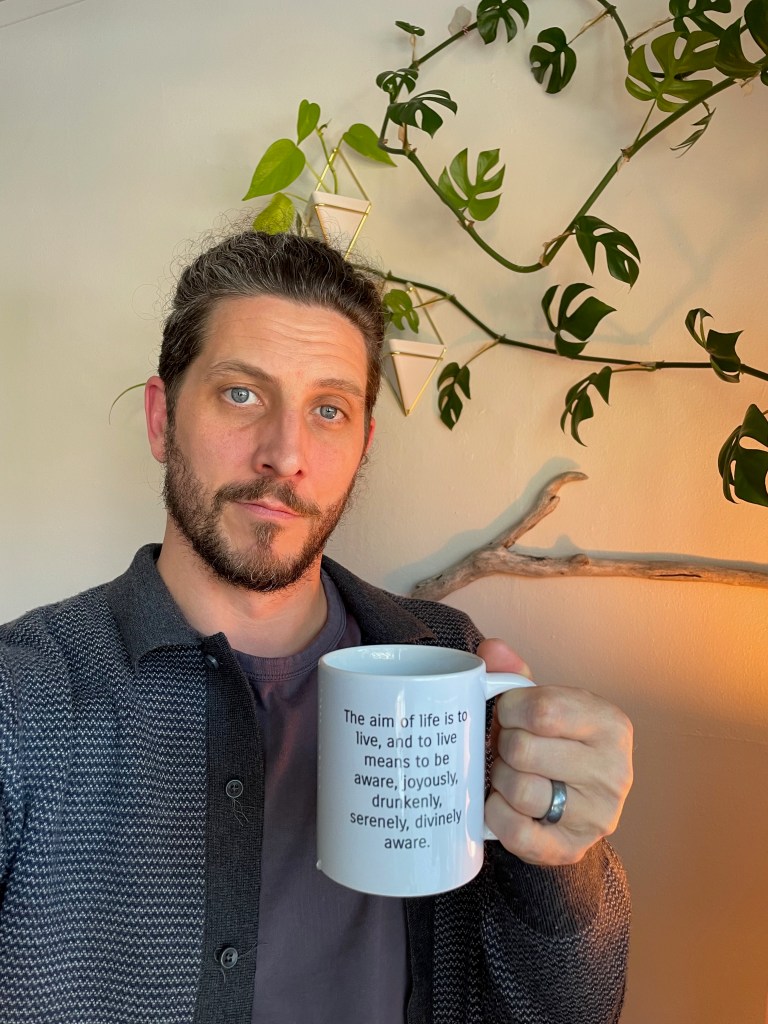
The quote begins with “Strange as it may seem today to say.” I am inclined to retort that, given how easily we lose track of our aliveness in pursuit of never-ending goals and inexhaustible definitions of success, it makes perfect sense to remind ourselves that life is for living.
And living becomes richer when we are here to feel it.
Awareness, however, takes practice. Many of us become acquainted with our bodies primarily through their complaints. A stabbing sting in the neck suddenly snatches our attention. A breath feels labored. Something burns or cramps. We catch ourselves clenching after an unpleasant encounter or memory, or bracing in anticipation of discomfort.
Somatic practices offer occasions to become familiar with a wider range of experience: the complaints as well as the comforts, the effort as well as the support. We might notice the chair beneath us, a movement that feels easier than expected, or the moment our jaw begins to soften. These small discoveries give us something practical to work with.
Awareness can help us recognize what we need and make choices that support a more enjoyable experience of living. In my clinical practice and personal life, I have seen meaningful, lasting changes begin with this “simple” ingredient: noticing something that had previously gone unnoticed, and responding differently.

People frequently arrive in my practice with acute or chronic pain, including jaw pain associated with temporomandibular disorders (TMD) and headaches. Through precise manual work combined with exercises and awareness, many find relief and begin to notice—and change—long-standing patterns of tension and movement. It is with great frequency (and joy for patients and myself!) that I have seen these changes become lasting improvements in function and quality of life.
There are useful scientific names for aspects of this awareness. Interoception concerns the sensing and processing of our internal bodily condition. Proprioception helps us perceive position and movement. Touch brings information about contact with the world. Naming these processes can help us understand and practice awareness, though in lived experience they mingle with emotion, memory, and meaning. We experience ourselves as whole people.
Much of this sensory exchange happens without our conscious attention. Somatic practice begins when we intentionally participate in it: noticing bodily sensation and becoming curious about what accompanies it.
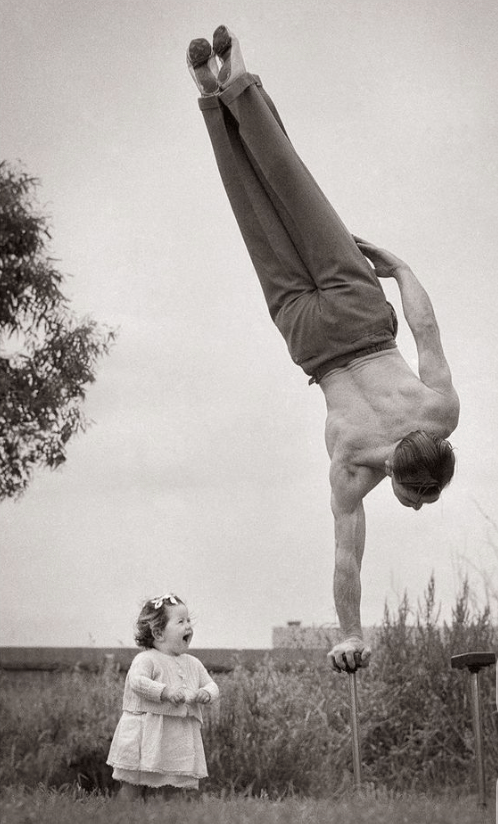
Such practices are diverse, and some have ancient roots. Dance, qigong, and yoga can all become ways of exploring ourselves through attentive movement. Yoga, for example, offers a rich tradition of cultivating awareness through posture, breath, and contemplation. These practices give us different ways to explore the relationships between body, mind, and spirit.
Hands-on somatic work offers another way into this exploration. In my practice, precise touch and guided movement provide opportunities to notice how you respond, discover what feels supportive, and participate at your own pace. The practitioner brings skill and attention; you bring your experience, preferences, and choices. The work develops through that relationship.
Yet the aim is more than noticing more. Constantly checking for discomfort can become exhausting. What I find juicier and more rewarding is a flexible awareness: the ability to attend, distinguish, respond, and then return to the activity of living.
We can notice a sensation without requiring it to explain everything about us. As we become more familiar with our patterns—how we brace, settle, reach, or withdraw—we gain more opportunities to respond with care. Over time, this familiarity can help us move through life with greater ease and adaptability.
For people recovering from overwhelming experiences, attending to the body may require particular gentleness. Sometimes a little sensory contact with the present is helpful: feeling the support beneath your feet, noticing your hands, or making a small, comfortable movement. You might quietly offer yourself a greeting to welcome yourself home to this present moment: “Hello, feet. Hello, hands. Hello, self.”
If turning inward feels unsettling, you can look around the room, notice a sound, or pause. The invitation is to find a manageable way of being here, with room to choose what happens next.
How we attend to experience can influence how that experience feels. With patient, consistent practice, somatics can help us develop a more familiar and compassionate relationship with ourselves—a sense of coming home to our bodies and to a life that feels more alive.
Somatic awareness need not become another standard to achieve. Some days the practice may involve a fuller breath. Other days, it may involve recognizing a limit, changing position, or asking for help. Ease can be a modest, specific discovery.
The simplest aim of somatics is to hone awareness. Its deeper invitation, as I understand it, is to let that awareness enrich the life we are already living.
To feel the ground. To recognize what we need. To find a little more room to move and to meet the world.
And in that aliveness, to discover ever more ease and satisfaction along the journey.

Bonus somatic activity:
Take another look at the images in this article. Do you notice anything in your body as you look? Perhaps your expression changes, your breath shifts, or you feel drawn to move. You might notice very little, and that belongs here too.
For me, joy and wonder seem to radiate through some of these images and into my body, changing how I feel and express myself. What, if anything, do you notice? Let curiosity lead, without needing to produce a particular feeling.

